
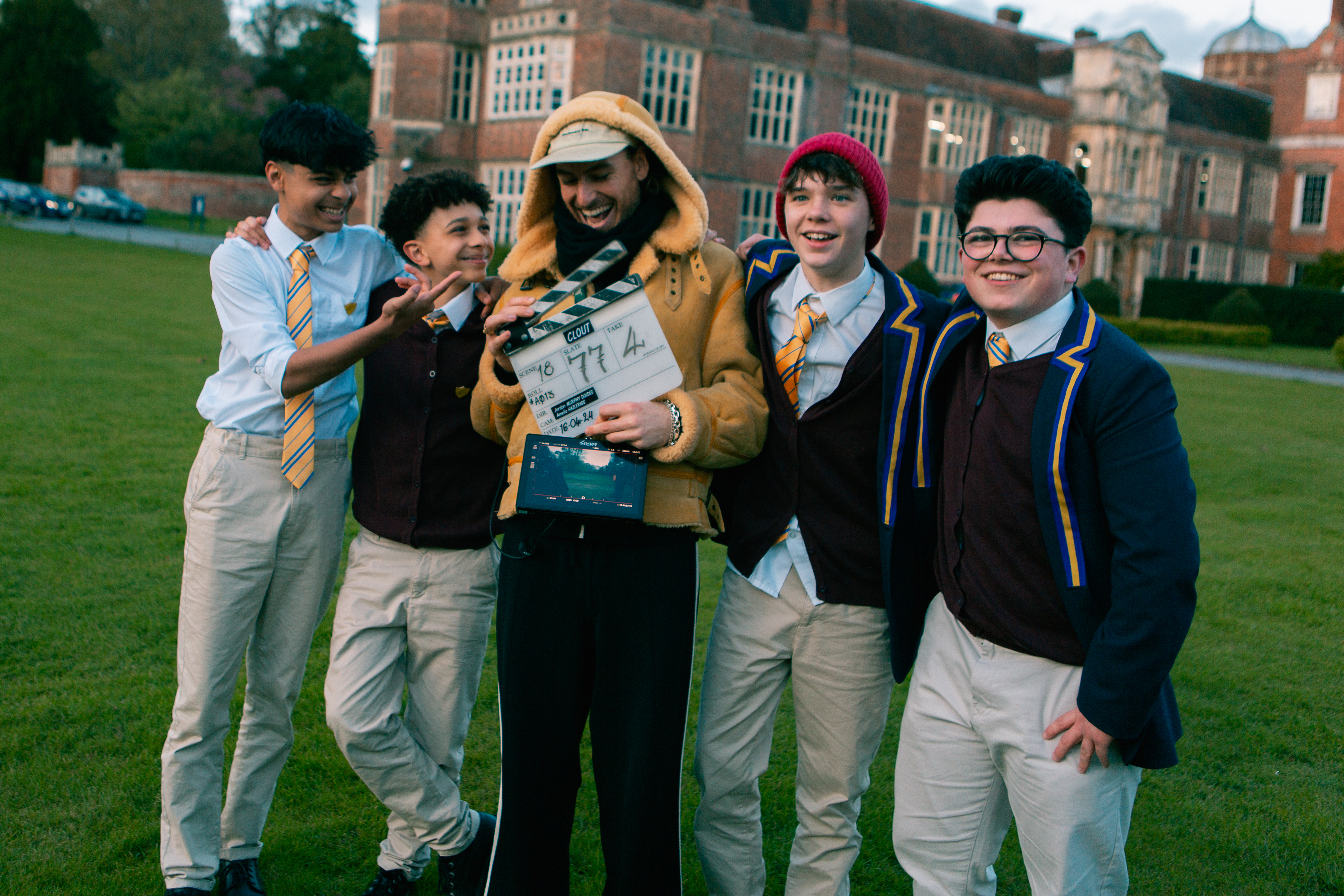

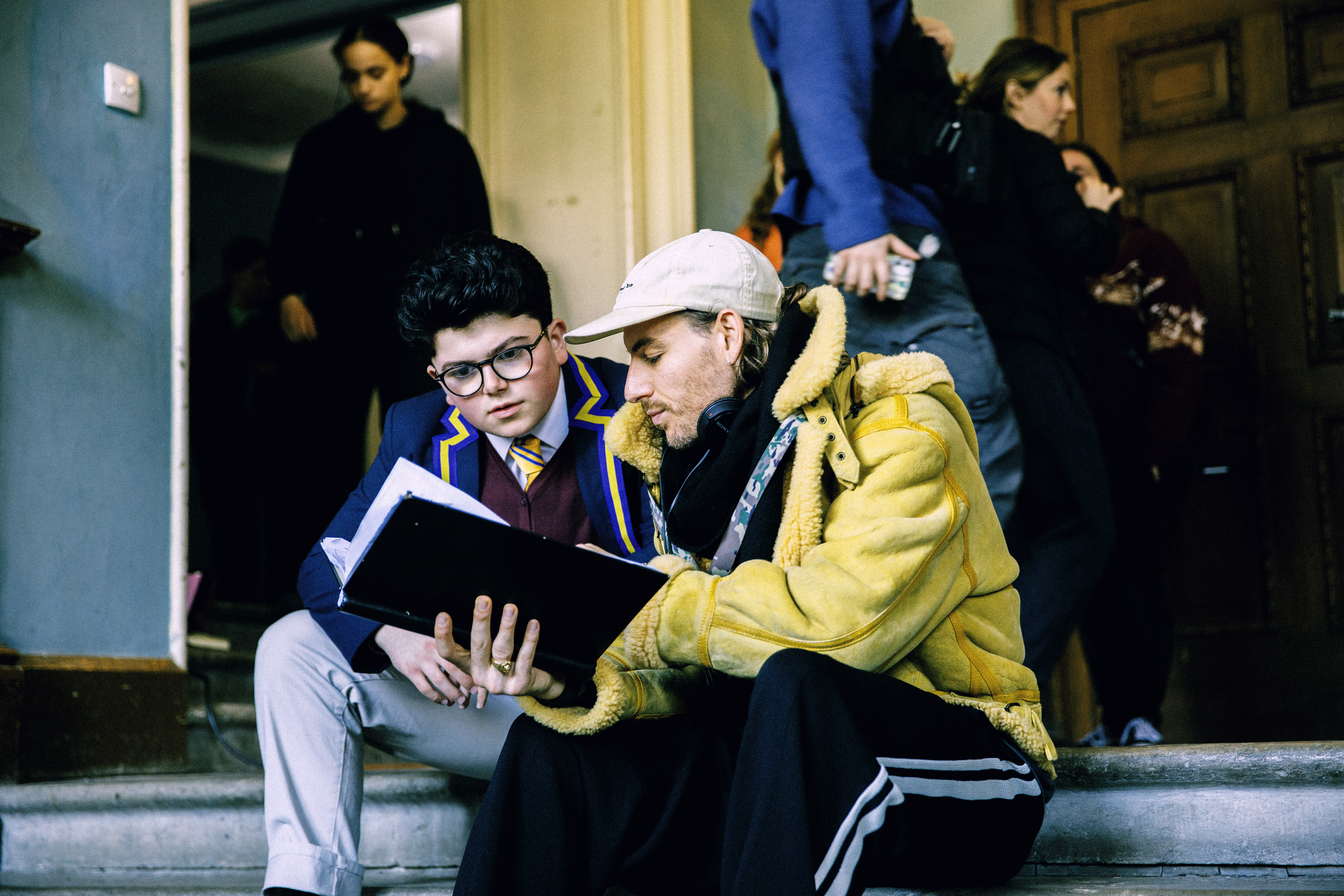
We were lucky enough to speak to Jordan Murphy Doidge about his new film CLOUT.
1. CLOUT taps into urgent issues around youth mental health, peer pressure, and online validation. What conversations were you hoping to spark with this film?
We wanted to start a conversation about how far young people feel they need to go to be seen. It’s not about villainising them – it’s about empathy. So many teenagers are living in a constant state of comparison, where their value is measured in likes and follows. If CLOUT can help young people, parents, or educators talk more openly about those pressures, then it’s done its job.
2. You partnered with organisations like Family Lives and The Mix. How did those collaborations shape the storytelling, and what responsibility do you think filmmakers have in tackling issues like these?
Those partnerships were essential. Both organisations work directly with young people and families navigating the effects of online life, so their insight helped ensure the story felt authentic. As filmmakers, I think we have a responsibility to handle sensitive subjects with care – to tell stories that don’t just entertain but reflect the real challenges people are facing.
Our wider partnerships have also been a blessing in sparking meaningful conversations with young people and parents. We partnered with Everyman, the nationwide UK cinema group, for a theatrical Q&A tour. After the first screening, a parent contacted us to say that attending the premiere prompted a conversation with her two teenage daughters about social media – one they’d needed to have for some time. That was exactly what we’d hoped for when we set out to make CLOUT.
3. How do you see CLOUT fitting into the larger cultural dialogue about the effects of social media on Gen Z?
I think CLOUT sits at the intersection of a cautionary tale and a coming-of-age drama. It’s not anti-technology – it’s pro-awareness. Gen Z are incredibly savvy, but they’re navigating a digital landscape that evolves faster than any generation before them. The film aims to reflect that complexity, showing both the empowerment and the pressure that comes with being constantly online.
We hope to follow in the footsteps of Netflix hits like Adolescence – they’ve created such fertile ground for stories like CLOUT.
4. The film shows a chilling escalation of behaviour in pursuit of digital attention. How closely does this reflect what you see in today’s youth culture?
Unfortunately, quite closely. We’re seeing a generation that’s incredibly creative and expressive, but also under immense pressure to perform constantly. The escalation in CLOUT might be heightened for dramatic effect, but it’s rooted in reality. The boundaries between authenticity and performance have blurred – and that tension is exactly what makes this story resonate (we hope).
5. What impact has the film had so far in Q&As or screenings with young audiences? Has any reaction surprised you?
The screenings have been incredibly powerful. We’ve had so many young people speak openly about their relationship with social media, creating a safe space for honest and vulnerable conversation. Many parents have asked how they can help and whether we could bring CLOUT to their children’s schools – which is exactly what will happen later this year through our partnership with Into Film.
Into Film, which also partnered on Adolescence, is essentially the educational equivalent of Netflix – streaming films directly into schools nationwide. It’s such a perfect fit for CLOUT.
Close-Up Culture | Interview with Jordan Murphy-Doidge
1. Archie Yates delivers a deeply unsettling yet sympathetic performance. What drew you to him for the role of Oskar, and how did you work together to access that vulnerability?
Our journey with Archie felt fated. While writing the script, we’d seen him in Jojo Rabbit and loved his performance – he perfectly captured that innocence of youth which is so essential for a cautionary tale to land. You have to root for the character.
When we shared our casting wish list with our casting director, Georgia Topley, she immediately told us she’d cast Archie in Jojo Rabbit – he was attached 24 hours later. Archie has this rare ability to make you care about a character even as they make terrible decisions. From our first conversations, he completely understood Oskar – not just what he does, but why he does it.
2. This cast has a range of talent with different points of visibility. How did you approach casting to maintain that balance?
Casting was all about authenticity and chemistry. It was important to mirror the dynamics of teenage social circles today, but also the world in which they exist. Every character was carefully considered to reflect modern culture.
We also cast Kit Price, who has almost two million followers himself. It was funny – when Kit arrived on set, none of the boys knew he was involved. It was like Leonardo DiCaprio had walked in – everyone was whispering, “No way, it’s Kit Price!”
3. What was the most emotionally difficult scene to direct, and how did you support the young actors through it?
There were a few challenging scenes. We even had to schedule a pick-up day for one of them. With four leads, ensuring everyone was emotionally in sync was tough. My biggest concern ahead of filming was the boys’ chemistry – as people say, never work with animals or children – but I was adamant about casting young people to keep it authentic.
So, instead of a traditional rehearsal day, I took them to an escape room. Before introductions were even made, they were problem solving in a haunted mansion! It worked wonders. Afterwards, we went to Nando’s, and they wouldn’t stop the banter – the group chat was made, and the memes followed!
That chemistry carried through, though when we needed serious performances, it took focus. Archie was a real leader in helping the others relax into those moments.
The scene where the boys abandon Oskar after finding a fishing jacket instead of a body was especially tough. We closed the set, shook off the nerves, and worked closely together to find the emotion. The school therapist scene was another emotional moment, but Archie and Nadine Marshall handled it brilliantly.
4. Kit Price, a TikTok influencer, brings a meta-layer to the story. How did you approach working with someone who lives within the world the film critiques?
Kit understands the mechanics of attention better than anyone, and he brought that insight into his performance. He was brilliant with the younger cast members, and we had open discussions about the irony of his role. He leaned into that tension, bringing an authenticity you simply can’t fake.
5. CLOUT is visually striking and tonally precise. Can you speak to your collaboration with the cinematographer and production team in creating the film’s aesthetic?
We were meticulous in our preparation, ensuring every detail served the storytelling. Working with our production designer, Collette Creary-Myers, we embedded visual foreshadowing throughout the film. Our DP, Amelia Hazelrigg, and I spent months crafting the shot list so that each frame reflected the emotional tone of its scene.
The costume design by Natalie Caroline Wilkins was equally considered, with subtle touches giving each character a distinct identity – just as children so often have.
In post-production, Rebecca Lloyd brought such a deft hand to the narrative – it was a joy collaborating with her. She truly understood the heart of the story. The score, composed by Olly Clarke and James Larter, added a subtle yet moving foundation, while Ines Adriana’s sound design and mix were exceptional – she really brought the whole piece to life.
The entire crew was phenomenal. This project has taken on even greater meaning for all of us, especially with the support of our charity and cinema partners, who are helping ensure the film has a genuine, positive impact.
Gareth Owens
 justcelebritymag.com