
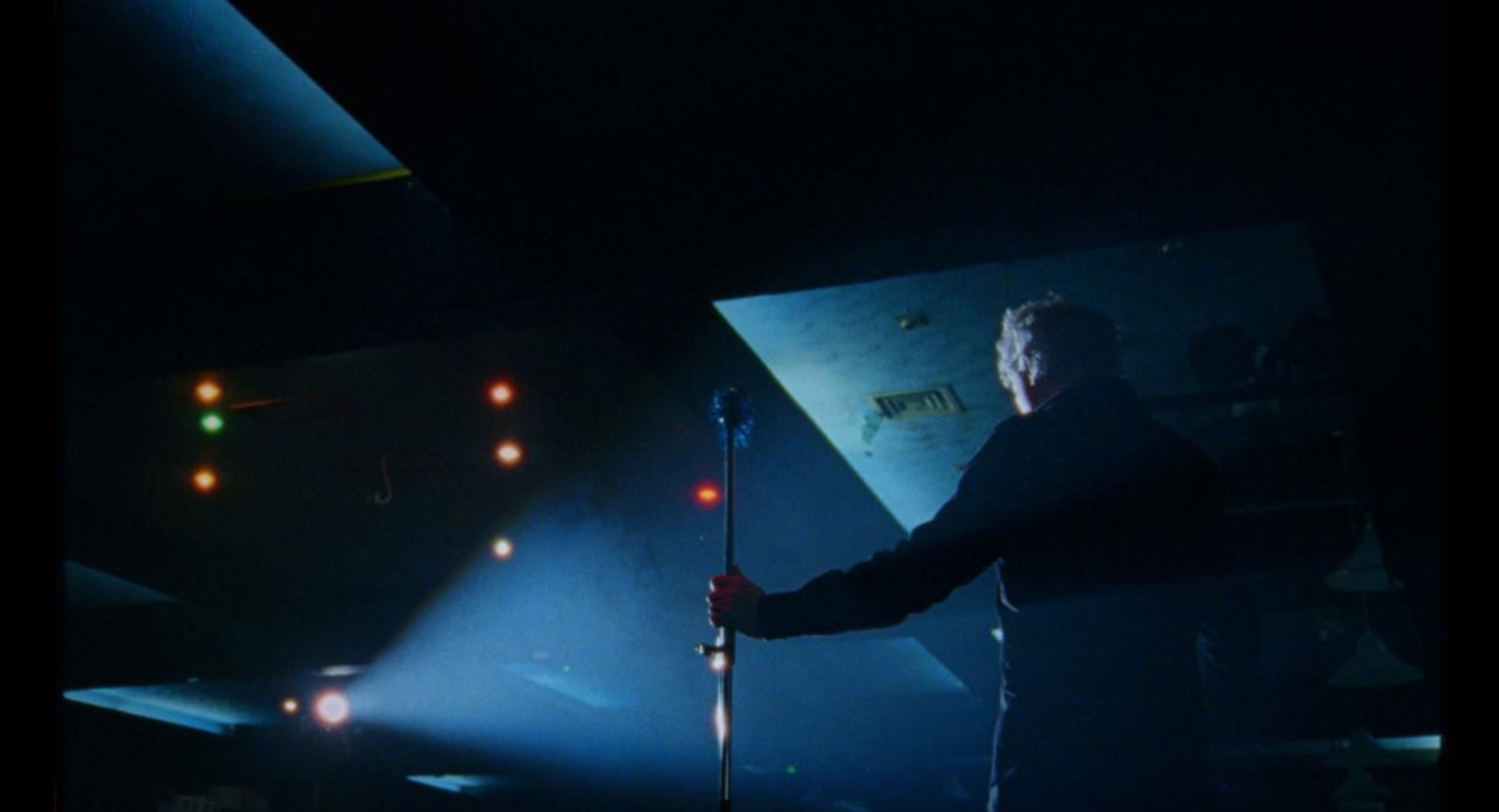
Kathryn Ferguson’s Nostalgie is the kind of short film that reminds you just how much can be achieved in a compact running time when every creative choice feels deliberate.
BAFTA-nominated, IFTA-winning and Oscar-qualified, the film marks another impressive step for Belfast-born filmmaker Ferguson, already known for the Emmy-nominated, multi-award-winning Sinéad O’Connor documentary Nothing Compares. Here, she moves confidently into fiction without losing the qualities that made her documentary work so distinctive: a fascination with music, identity, image and the complicated ways culture can outlive its creators.
At the centre of Nostalgie is Drew Lord Haig, played with wonderfully bruised vanity by Aidan Gillen. Drew is a faded English pop star from the 1980s, unexpectedly invited to perform in Northern Ireland after years away from the spotlight. What initially looks like an opportunity to revisit former glory gradually becomes something far more uncomfortable.
Drew discovers that his music has taken on a political life of its own, repurposed in ways that sit uneasily with what he believed it represented. Ferguson handles that revelation beautifully. Rather than turning the film into a blunt political statement, she allows the discomfort to develop slowly, letting vanity, nostalgia, regret and moral responsibility collide.
It is a smart premise, but what makes Nostalgie so effective is its restraint.
Ferguson never overexplains. She trusts the audience to understand the tension between the seductive pull of nostalgia and the danger of romanticising the past. The film asks what responsibility an artist has once their work leaves their hands, and whether a song can ever truly belong only to the person who created it.
There is also something refreshing about seeing a female director approach a story about male ego and ageing celebrity with such precision. Drew could easily have become a caricature, but Ferguson gives him just enough vulnerability to make his predicament uncomfortable rather than simply comic. His desire to be relevant again is painfully recognisable.
Gillen is excellent in the role. He understands that Drew’s greatest weakness is not arrogance alone, but his desperate need to still matter. There is humour in the character, but also melancholy, and Gillen finds the balance effortlessly.
Jessica Reynolds and Michael Smiley provide excellent support, while Stacey Gregg’s screenplay, adapted from Wendy Erskine’s short story, is sharp, economical and full of uncomfortable observations about memory and self-importance.
Music, naturally, is central to everything.
Dan Smith, the Grammy-nominated and BRIT Award-winning frontman of Bastille, has created original songs and score that feel remarkably convincing as products of another era. The faux-1980s material could easily have tipped into parody, but instead it feels authentic enough that you understand exactly why Drew remains emotionally attached to that period of his life.
The music becomes more than atmosphere. It is part of the film’s argument about how songs mutate over time, acquiring meanings their creators may never have intended.
Visually, Nostalgie is equally accomplished. Double Oscar-nominated cinematographer Robbie Ryan brings texture and atmosphere without overwhelming the intimacy of the story. There is a lived-in quality to the images that suits Ferguson’s filmmaking perfectly.
Most impressive of all is how assured the direction feels.
Ferguson clearly understands music not simply as soundtrack, but as identity, memory and power. Her documentary background gives Nostalgie an unusual authenticity, yet the film never feels like a documentarian experimenting with drama. It feels like the work of a filmmaker entirely comfortable in both forms.
That makes the film’s awards recognition unsurprising. Its BAFTA nomination, IFTA win and Oscar qualification feel thoroughly deserved.
There are plenty of short films built around clever concepts, but Nostalgie goes further. It takes a deceptively simple story about a forgotten pop star and uses it to examine nostalgia, artistic responsibility, political memory and the intoxicating desire to be seen again.
Ferguson has made something witty, melancholy and quietly provocative.
Most importantly, Nostalgie stays with you after it ends. In an awards season crowded with films fighting to make an immediate impression, that lingering quality may be its greatest strength.
Kathryn Ferguson has already established herself as an exceptional documentary filmmaker. With Nostalgie, she makes an equally compelling case for herself as a distinctive fiction director — and one whose voice deserves to be heard well beyond the short-film format.
An intelligent, beautifully performed and refreshingly original piece of filmmaking, Nostalgie feels entirely worthy of its place in the Oscar conversation.
Marc Johnson 10/10


Leave a Reply