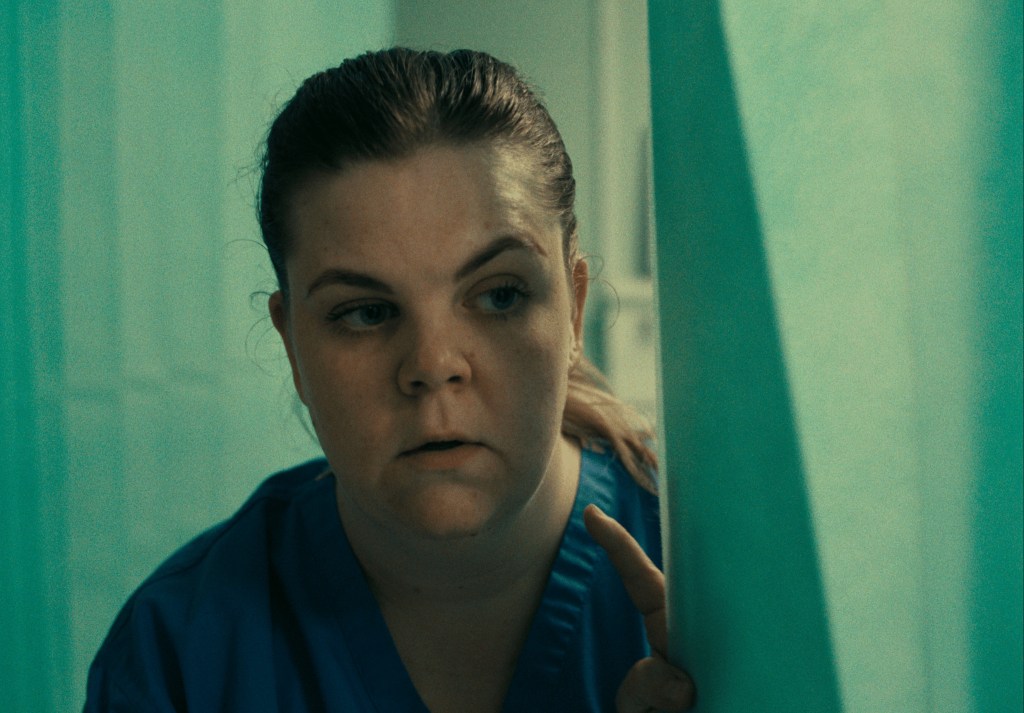
1. The film is now Oscar® and BAFTA-qualifying. At what point did you begin to see it as a potential awards-season contender, and how has that recognition influenced your ambitions for the project?
We were very lucky that the first festival response we received was an acceptance, which was a blessing. The film then won Best Short Film at that very first festival. I think that was when I first thought, “Oh, maybe there’s something here.” Perhaps we could go beyond having a healthy festival run and take it a little further.
Then we won Best International Film at LA Shorts, which qualified us for the Oscars. We were already BAFTA-qualified by that point, so that felt like another moment of thinking, “Maybe we should really give this a chance.”
When I finish a film, I try not to think too much about awards. You put it out into the world as far as you can and hope it resonates with an audience. When it does, that’s such a joyous thing, so this extra attention has been beautiful and very humbling.
Usually, I’m the first to move on to the next project once a film is out in the world. But with this one, I felt it deserved some extra attention—to give it a longer life and get it in front of more people. The recognition has encouraged me to stay with the film a little longer and see how far we can take it.
2. What do you think distinguishes MINE FOR A MOMENT from other Oscar and BAFTA contenders?
I haven’t seen all the other contenders yet, so I can really only speak to what feels distinctive about ours. I’m looking forward to discovering the other films.
For me, it’s the question at the heart of the story: can we feel compassion in an uncomfortable place? Our lead character does something we would instinctively condemn as unforgivable. But having come to understand her pain, can we still feel compassion for her?
The film invites the audience’s feelings to shift and asks them to question their own moral judgments. At the same time, I hope it remains an engaging, intense and emotional watch that doesn’t shy away from telling a difficult story.
My hope is that this tension stays with people afterwards: understanding someone’s pain doesn’t mean excusing their actions, but can we hold that compassion and moral judgment at the same time?
3. With the film receiving recognition on both sides of the Atlantic, have you noticed a difference in how international audiences and industry professionals respond to its themes of miscarriage, infertility and moral desperation?
Honestly, I haven’t noticed a major difference in the responses on either side of the Atlantic, which has been lovely. I think the subjects the film addresses are universal.
What has been particularly moving is how openly people have shared their own experiences after watching it, especially around infertility and miscarriage. These experiences touch more lives than we sometimes realise, whether directly or through a partner, friend or family member. Fertility is something we can easily take for granted, and these conversations have been a reminder of how deeply personal and painful that journey can be.
Across audiences in the UK, elsewhere in Europe and North America, it has been beautiful to see how much compassion people have shown Cheryl, and how that has opened a space for them to talk about their own lives. That willingness to share something so personal means a great deal to me.
I think that’s one of the beautiful things about film, art and literature: they can give us a way into conversations that might otherwise be difficult to begin.
4. What would an Academy Award or BAFTA nomination mean for this particular film, and for the people who brought it to life?
A nomination would allow the film to travel further and reach more people, which is the reason we make films in the first place: to share an experience with an audience.
Honestly, a nomination for either an Academy Award or a BAFTA would mean the world to me and to everyone who helped bring this film to life. We worked incredibly hard on a tiny budget, and so much time, care and love went into it. It’s been around two years since I first began planning the film, so it has been part of my life for a long time.
I feel we’re always learning, and a nomination would be a beautiful milestone on that journey—a recognition of everyone’s work and encouragement to keep learning and moving forward.
I also hope it could open doors to new collaborators and opportunities, perhaps giving me a seat at a slightly bigger table, where I could continue making films, explore more ambitious projects and share those stories with wider audiences.
5. Gina Fillingham brings considerable television experience from projects including The Responder and Too Close to a role that demands an exceptionally vulnerable and physically intense performance. What conversations did you have about building Cheryl’s emotional journey?
Gina is a wonderful actress and such a lovely human being. I didn’t audition her. I’d seen her work, and we had a Zoom conversation that lasted about two hours. During that conversation, I just knew she understood who Cheryl was and what the role needed. I could feel the care and love she was willing to pour into her.
She also has such an expressive face. I knew the camera would pick up the smallest shifts in her expression, and that those little nuances could say so much.
We didn’t really rehearse. Instead, we spent time talking about Cheryl: her past, what had brought her to this point, and what she was thinking and feeling in each scene. We broke down the individual moments and explored what was happening underneath her actions.
But we also talked more broadly about her situation and how difficult it must be to live with that pain. Those conversations were as much about understanding her as they were about the practical work of building a performance.
I think we both felt a great deal of empathy for Cheryl, and Gina brought that compassion into her portrayal. For me, that’s a huge part of why she makes Cheryl so lovable, even as the story takes us somewhere deeply troubling.
6. Celyn Jones is a BAFTA Cymru Award winner with an extensive screen career. What made him the perfect fit to play Darren?
I was already familiar with Celyn’s work and had always admired his versatility. It’s incredible to see how quickly he can build a character—it almost feels as though he creates these people out of thin air. But behind that is such a deep understanding of storytelling and human behaviour.
What I particularly love about his work is the humanity he brings to every character. Nothing feels artificial. There’s a beautiful authenticity to what he does, and that was essential for Darren.
Towards the end of the film, Darren becomes a kind of moral compass, so we needed someone who could carry that weight while still feeling like a real person. Celyn brought that balance so beautifully and elegantly.
He’s also a wonderful human being, which made working with him incredibly easy. There’s a real generosity to him, both as a person and as an actor, and I felt very lucky to have him in the role.
7. Iikka Salminen’s cinematography plays a key role in establishing the film’s intimate, increasingly unsettling atmosphere. What about their style makes the film’s cinematography unique?
Iikka is a very close collaborator of mine—he’s shot everything I’ve made. He’s a wonderful visual artist, and I love working with him. Beyond his eye, what I particularly value is the care and depth he brings to each project. We spend a lot of time exploring what the individual story needs, and that’s what guides the visual approach.
Every project we’ve made together has been different. For this film, we were both very clear that we wanted a sense of social realism: something with a slightly edgy, grungy feel that kept us grounded in Cheryl’s world.
We had a very small budget and worked extensively with practical lighting. Iikka has such a deep understanding of light, and he brought so much to the film’s atmosphere through those choices.
For me, his ability to adapt is one of his greatest strengths. He approaches each story with fresh eyes, and the cinematography grows out of that particular film’s characters, spaces and emotional needs.
8. Kristian, what’s next for you in terms of other projects, would you like to continue making psychological work?
I currently have two projects in development: a television series and a feature film, both with BAFTA-nominated producer Cheyenne Conway. I’m very excited about both. Along with that I’m also shooting another short film in Italy shortly.
The series is a psychological drama following a young British dancer at an elite ballet academy in Moscow, whose forbidden relationship with a male principal dancer puts both his future and his safety at risk. As a former professional ballet dancer, I’m drawing on personal experiences, so it’s a world I have a very close connection to.
And yes, psychological storytelling is definitely something I want to continue exploring. I’ve been drawn to it for as long as I can remember. I’m fascinated by people’s inner lives—what drives them, what they conceal, and how that shapes their choices. There’s so much to explore there, and I’m excited to keep doing that through different stories.


Leave a Reply